С вами снова Николай, в прошлой статье «DevBoy — как я создал проект устройства с открытым исходным кодом и запустил проект на Kickstarter» упор делался больше на внешнем виде и железе, сегодня поговорим о том как это сделано «внутри» и разберем программную часть.
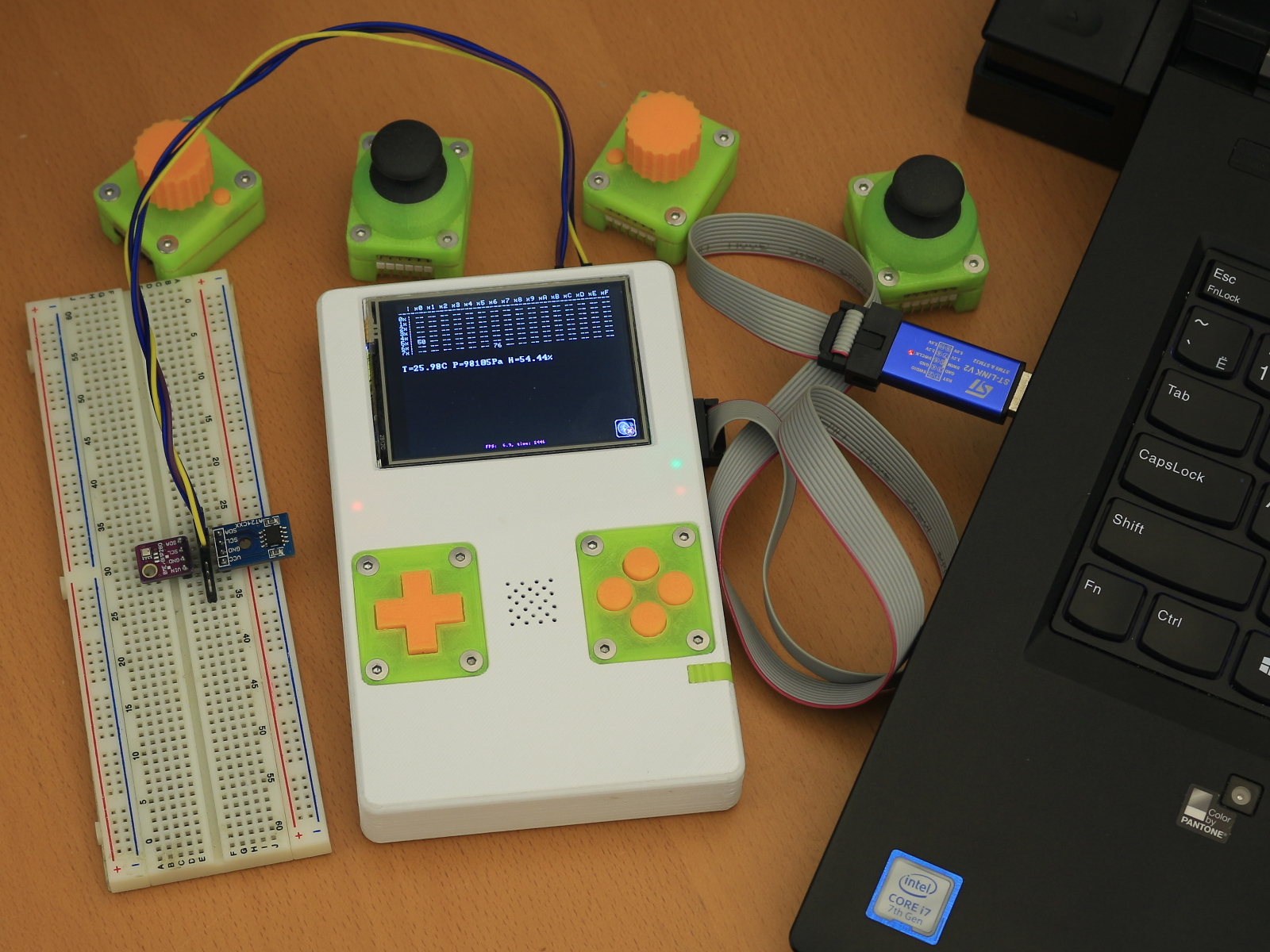
Кому интересно — прошу под кат.
Как было сказано ранее, проект базируется на микроконтроллере STM32F416RG от STMicroelectronics на ядре ARM Cortex-M4. Для разработки под данные микроконтроллеры существует несколько различных IDE, однако для открытого проекта нужна как минимум бесплатная IDE, а лучше еще и Open Source. Кроме того, IDE должна еще поддерживаться в STM32CubeMX. На тот момент, когда я начал работать над этим проектом была только одна IDE удовлетворяющая всем этим требованиям — System Workbench for STM32.
 На данный момент существует еще Atollic TrueStudio ставшая бесплатной после того как STMicroelectronics их купила.
Следующая используемая программа — это STM32CubeMX. Данная программа представляет собой утилиту для конфигурирования периферии микроконтроллера с помощью графического интерфейса.

Результатом является код который включает в себя Hardware Abstraction Layer(HAL). Многие программисты не очень любят это «творение«, оно не лишено багов, но, тем не менее, оно значительно упрощает разработку и улучшает переносимость программ между разными микроконтроллерами от STMicroelectronics.
Кроме того, при конфигурации можно задать использование некоторого стороннего открытого ПО такого как FreeRTOS, FatFS и некоторых других.
Описание используемого ПО закончили, теперь переходим к самому интересному — к DevCore. Название происходит от «Ядро Разработки» пойдем по порядку.
В первую очередь это С++ RTOS Wrapper(FreeRTOS в данном случае). Враппер нужен по двум причинам:
- Гораздо приятнее создать объект, а потом звать к примеру mutex.Take(), чем создавать хэндл, звать функцию создания, а потом передавать этот хэндл во все функции работы с мьютексами
- В случае необходимости замены RTOS достаточно заменить враппер, а не все вызовы функций RTOS из кода
Приводить код враппера тут не имеет смысла, кому интересно — смотрим на GitHub, а мы идем дальше.
Следующая часть — Application Framework. Это базовый класс для всех задач. Поскольку это всего два относительно не больших файла есть смысл привести их полностью:
//****************************************************************************** // @file AppTask.h // @author Nicolai Shlapunov // // @details DevCore: Application Task Base Class, header // // @section LICENSE // // Software License Agreement (Modified BSD License) // // Copyright (c) 2016, Devtronic & Nicolai Shlapunov // All rights reserved. // // Redistribution and use in source and binary forms, with or without // modification, are permitted provided that the following conditions are met: // // 1. Redistributions of source code must retain the above copyright // notice, this list of conditions and the following disclaimer. // 2. Redistributions in binary form must reproduce the above copyright // notice, this list of conditions and the following disclaimer in the // documentation and/or other materials provided with the distribution. // 3. Neither the name of the Devtronic nor the names of its contributors // may be used to endorse or promote products derived from this software // without specific prior written permission. // 4. Redistribution and use of this software other than as permitted under // this license is void and will automatically terminate your rights under // this license. // // THIS SOFTWARE IS PROVIDED BY DEVTRONIC ''AS IS'' AND ANY EXPRESS OR IMPLIED // WARRANTIES, INCLUDING, BUT NOT LIMITED TO, THE IMPLIED WARRANTIES OF // MERCHANTABILITY AND FITNESS FOR A PARTICULAR PURPOSE ARE DISCLAIMED. // IN NO EVENT SHALL DEVTRONIC BE LIABLE FOR ANY DIRECT, INDIRECT, INCIDENTAL, // SPECIAL, EXEMPLARY, OR CONSEQUENTIAL DAMAGES (INCLUDING, BUT NOT LIMITED // TO, PROCUREMENT OF SUBSTITUTE GOODS OR SERVICES; LOSS OF USE, DATA, OR // PROFITS; OR BUSINESS INTERRUPTION) HOWEVER CAUSED AND ON ANY THEORY // LIABILITY, WHETHER IN CONTRACT, STRICT LIABILITY, OR TORT (INCLUDING // NEGLIGENCE OR OTHERWISE) ARISING IN ANY WAY OUT OF THE USE OF THIS // SOFTWARE, EVEN IF ADVISED OF THE POSSIBILITY OF SUCH DAMAGE. // // @section SUPPORT // // Devtronic invests time and resources providing this open source code, // please support Devtronic and open-source hardware/software by // donations and/or purchasing products from Devtronic. // //****************************************************************************** #ifndef AppTask_h #define AppTask_h // ***************************************************************************** // *** Includes ************************************************************ // ***************************************************************************** #include "DevCfg.h" // ***************************************************************************** // * AppTask class. This class is wrapper for call C++ function from class. **** // ***************************************************************************** class AppTask { public: // ************************************************************************* // *** Init Task ******************************************************* // ************************************************************************* virtual void InitTask(void) {CreateTask();} protected: // ************************************************************************* // *** Constructor ***************************************************** // ************************************************************************* AppTask(uint16_t stk_size, uint8_t task_prio, const char name[], uint16_t queue_len = 0U, uint16_t queue_msg_size = 0U, void* task_msg_p = nullptr, uint32_t task_interval_ms = 0U) : ctrl_queue((queue_len + 2U), sizeof(CtrlQueueMsg)), task_queue(queue_len, queue_msg_size), task_msg_ptr(task_msg_p), timer(task_interval_ms, RtosTimer::REPEATING, TimerCallback, (void*)this), stack_size(stk_size), task_priority(task_prio), task_name(name) {}; // ************************************************************************* // *** Virtual destructor - prevent warning **************************** // ************************************************************************* virtual ~AppTask() {}; // ************************************************************************* // *** Create task function ******************************************** // ************************************************************************* // * This function creates new task in FreeRTOS, provide pointer to function // * and pointer to class as parameter. When TaskFunctionCallback() called // * from FreeRTOS, it use pointer to class from parameter to call virtual // * functions. void CreateTask(); // ************************************************************************* // *** Setup function ************************************************** // ************************************************************************* // * * virtual function - some tasks may not have Setup() actions virtual Result Setup() {return Result::RESULT_OK;} // ************************************************************************* // *** IntervalTimerExpired function *********************************** // ************************************************************************* // * Empty virtual function - some tasks may not have TimerExpired() actions virtual Result TimerExpired() {return Result::RESULT_OK;} // ************************************************************************* // *** ProcessMessage function ***************************************** // ************************************************************************* // * Empty virtual function - some tasks may not have ProcessMessage() actions virtual Result ProcessMessage() {return Result::RESULT_OK;} // ************************************************************************* // *** Loop function *************************************************** // ************************************************************************* // * Empty virtual function - some tasks may not have Loop() actions virtual Result Loop() {return Result::RESULT_OK;} // ************************************************************************* // *** SendTaskMessage function **************************************** // ************************************************************************* Result SendTaskMessage(const void* task_msg, bool is_priority = false); private: // Task control queue message types enum CtrlQueueMsgType { CTRL_TIMER_MSG, CTRL_TASK_QUEUE_MSG }; // Task control queue message struct struct CtrlQueueMsg { CtrlQueueMsgType type; }; // Task control queue RtosQueue ctrl_queue; // Task queue RtosQueue task_queue; // Pointer to receive message buffer void* task_msg_ptr; // Timer object RtosTimer timer; // Task stack size uint16_t stack_size; // Task priority uint8_t task_priority; // Pointer to the task name const char* task_name; // ************************************************************************* // *** IntLoop function ************************************************ // ************************************************************************* Result IntLoop(); // ************************************************************************* // *** TaskFunctionCallback ******************************************** // ************************************************************************* static void TaskFunctionCallback(void* ptr); // ************************************************************************* // *** IntervalTimerCallback function ********************************** // ************************************************************************* static void TimerCallback(void* ptr); // ************************************************************************* // *** SendControlMessage function ************************************* // ************************************************************************* Result SendControlMessage(const CtrlQueueMsg& ctrl_msg, bool is_priority = false); // ************************************************************************* // *** Change counter ************************************************** // ************************************************************************* static void ChangeCnt(bool is_up); // ************************************************************************* // *** Private constructor and assign operator - prevent copying ******* // ************************************************************************* AppTask(); AppTask(const AppTask&); AppTask& operator=(const AppTask&); }; #endif//****************************************************************************** // @file AppTask.cpp // @author Nicolai Shlapunov // // @details DevCore: Application Task Base Class, implementation // // @copyright Copyright (c) 2016, Devtronic & Nicolai Shlapunov // All rights reserved. // // @section SUPPORT // // Devtronic invests time and resources providing this open source code, // please support Devtronic and open-source hardware/software by // donations and/or purchasing products from Devtronic. // //****************************************************************************** // ***************************************************************************** // *** Includes ************************************************************ // ***************************************************************************** #include "AppTask.h" #include "RtosMutex.h" // ***************************************************************************** // *** Static variables **************************************************** // ***************************************************************************** static RtosMutex startup_mutex; static uint32_t startup_cnt = 0U; // ***************************************************************************** // *** Create task function ************************************************ // ***************************************************************************** void AppTask::CreateTask() { Result result = Result::RESULT_OK; // If interval timer period isn't zero or task queue present if((timer.GetTimerPeriod() != 0U) || (task_queue.GetQueueLen() != 0U)) { // Set Control Queue name ctrl_queue.SetName(task_name, "Ctrl"); // Create control queue result = ctrl_queue.Create(); } // If task queue present if(task_queue.GetQueueLen() != 0U) { // Set Task Queue name task_queue.SetName(task_name, "Task"); // Create task queue result |= task_queue.Create(); } // If interval timer period isn't zero if(timer.GetTimerPeriod() != 0U) { // Create timer result |= timer.Create(); } // Create task: function - TaskFunctionCallback(), parameter - pointer to "this" result |= Rtos::TaskCreate(TaskFunctionCallback, task_name, stack_size, this, task_priority); // Check result if(result.IsBad()) { // TODO: implement error handling Break(); } } // ***************************************************************************** // *** SendTaskMessage function ******************************************** // ***************************************************************************** Result AppTask::SendTaskMessage(const void* task_msg, bool is_priority) { Result result = Result::RESULT_OK; // Send task message to front or back of task queue if(is_priority == true) { result = task_queue.SendToFront(task_msg); } else { result = task_queue.SendToBack(task_msg); } // If successful - send message to the control queue if(result.IsGood()) { CtrlQueueMsg ctrl_msg; ctrl_msg.type = CTRL_TASK_QUEUE_MSG; result = SendControlMessage(ctrl_msg, is_priority); } return result; } // ***************************************************************************** // *** IntLoop function **************************************************** // ***************************************************************************** Result AppTask::IntLoop() { Result result = Result::RESULT_OK; while(result.IsGood()) { // Buffer for control message CtrlQueueMsg ctrl_msg; // Read on the control queue result = ctrl_queue.Receive(&ctrl_msg, timer.GetTimerPeriod() * 2U); // If successful if(result.IsGood()) { // Check message type switch(ctrl_msg.type) { case CTRL_TIMER_MSG: result = TimerExpired(); break; case CTRL_TASK_QUEUE_MSG: { // Non blocking read from the task queue result = task_queue.Receive(task_msg_ptr, 0U); // If successful if(result.IsGood()) { // Process it! result = ProcessMessage(); } break; } default: result = Result::ERR_INVALID_ITEM; break; } } } return result; } // ***************************************************************************** // *** TaskFunctionCallback ************************************************ // ***************************************************************************** void AppTask::TaskFunctionCallback(void* ptr) { Result result = Result::ERR_NULL_PTR; if(ptr != nullptr) { // Set good result result = Result::RESULT_OK; // Get reference to the task object AppTask& app_task = *(static_cast<AppTask*>(ptr)); // Increment counter before call Setup() ChangeCnt(true); // Call virtual Setup() function from AppTask class app_task.Setup(); // Decrement counter after call Setup() ChangeCnt(false); // Pause for give other tasks run Setup() RtosTick::DelayTicks(1U); // Pause while other tasks run Setup() before executing any Loop() while(startup_cnt) RtosTick::DelayTicks(1U); // If no timer or queue - just call Loop() function if((app_task.timer.GetTimerPeriod() == 0U) && (app_task.task_queue.GetQueueLen() == 0U)) { // Call virtual Loop() function from AppTask class while(app_task.Loop() == Result::RESULT_OK); } else { // Start task timer if needed if(app_task.timer.GetTimerPeriod() != 0U) { result = app_task.timer.Start(); } // Check result if(result.IsGood()) { // Call internal AppTask function result = app_task.IntLoop(); } // Stop task timer if needed if(app_task.timer.GetTimerPeriod() != 0U) { result |= app_task.timer.Stop(); } } } // Check result if(result.IsBad()) { // TODO: implement error handling Break(); } // Delete task after exit Rtos::TaskDelete(); } // ***************************************************************************** // *** TimerCallback function ********************************************** // ***************************************************************************** void AppTask::TimerCallback(void* ptr) { Result result = Result::ERR_NULL_PTR; if(ptr != nullptr) { // Get reference to the task object AppTask& task = *((AppTask*)ptr); // Create control timer message CtrlQueueMsg timer_msg; timer_msg.type = CTRL_TIMER_MSG; // Send message to the control queue result = task.SendControlMessage(timer_msg); } // Check result if(result.IsBad()) { // TODO: implement error handling Break(); } } // ***************************************************************************** // *** SendControlMessage function ***************************************** // ***************************************************************************** Result AppTask::SendControlMessage(const CtrlQueueMsg& ctrl_msg, bool is_priority) { Result result; if(is_priority == true) { result = ctrl_queue.SendToFront(&ctrl_msg); } else { result = ctrl_queue.SendToBack(&ctrl_msg); } return result; } // ***************************************************************************** // *** Change counter ****************************************************** // ***************************************************************************** void AppTask::ChangeCnt(bool is_up) { // Take semaphore before change counter startup_mutex.Lock(); // Check direction if(is_up == true) { // Increment counter startup_cnt++; } else { // Decrement counter startup_cnt--; } // Give semaphore after changes startup_mutex.Release(); } Наследуемые классы могут переопределить 4 виртуальные функции:
- Setup() — функция вызываемая перед запуском задачи. Гарантируется завершение кода во всех данных функциях всех задач перед началом исполнения основных циклов.
- Loop() — основной цикл задачи, где задача сама организует что она хочет. Не может использоваться совместно с двумя следующими функциями.
- TimerExpired() — функция вызываемая периодически с заданным интервалом. Удобно для реализации опроса датчика например.
- ProcessMessage() — функция обработки сообщения от других задач.
Две первые функции реализуют «Arduino-Style» для задач.
Две последующие реализуют «событийную» систему упрощающую взаимодействие задач. При таком подходе задача реализует внешний интерфейс в виде функций, которые отправляют отправляют данные задаче через внутренний почтовый ящик. При таком подходе использующему данный интерфейс не нужно беспокоится в каком контексте выполняются действия. Правда это возможно только для сеттеров или команд. Для геттеров лучше всего использовать мьютексы и копирование данных для предотвращения захвата мьютекса надолго.
Данный подход был подсмотрен когда я разрабатывал ПО для медицинского оборудования. Микроконтроллер имеет одну «сторожевую собаку»(watchdog) и в случае множества задач нужно отслеживать их всех. Для этого была отдельная задача которая обслуживала watchdog и получала сообщения от других задач высылаемых из функции TimerExpired(). Если в течении периода таймера задачи * n не приходили сообщения — задача умерла, тушим свет принимаем действия по отключению всех железок воздействующих на пациента.
Все задачи представляют собой синглтоны, создать напрямую их нельзя, но можно получить ссылку на задачу. Для этого каждая задача реализует статический метод GetInstance():
// ***************************************************************************** // *** Get Instance ******************************************************** // ***************************************************************************** Application& Application::GetInstance(void) { static Application application; return application; }Так же в состав входят задачи для вывода звука, для модулей ввода и для обслуживания экрана.
Задача вывода звука достаточно проста — получает массив частот и длительностей и просто периодически меняет настройки таймера для генерации прямоугольных импульсов определенной частоты.
//****************************************************************************** // @file SoundDrv.h // @author Nicolai Shlapunov // // @details DevCore: Sound Driver Class, header // // @section LICENSE // // Software License Agreement (Modified BSD License) // // Copyright (c) 2016, Devtronic & Nicolai Shlapunov // All rights reserved. // // Redistribution and use in source and binary forms, with or without // modification, are permitted provided that the following conditions are met: // // 1. Redistributions of source code must retain the above copyright // notice, this list of conditions and the following disclaimer. // 2. Redistributions in binary form must reproduce the above copyright // notice, this list of conditions and the following disclaimer in the // documentation and/or other materials provided with the distribution. // 3. Neither the name of the Devtronic nor the names of its contributors // may be used to endorse or promote products derived from this software // without specific prior written permission. // 4. Redistribution and use of this software other than as permitted under // this license is void and will automatically terminate your rights under // this license. // // THIS SOFTWARE IS PROVIDED BY DEVTRONIC ''AS IS'' AND ANY EXPRESS OR IMPLIED // WARRANTIES, INCLUDING, BUT NOT LIMITED TO, THE IMPLIED WARRANTIES OF // MERCHANTABILITY AND FITNESS FOR A PARTICULAR PURPOSE ARE DISCLAIMED. // IN NO EVENT SHALL DEVTRONIC BE LIABLE FOR ANY DIRECT, INDIRECT, INCIDENTAL, // SPECIAL, EXEMPLARY, OR CONSEQUENTIAL DAMAGES (INCLUDING, BUT NOT LIMITED // TO, PROCUREMENT OF SUBSTITUTE GOODS OR SERVICES; LOSS OF USE, DATA, OR // PROFITS; OR BUSINESS INTERRUPTION) HOWEVER CAUSED AND ON ANY THEORY // LIABILITY, WHETHER IN CONTRACT, STRICT LIABILITY, OR TORT (INCLUDING // NEGLIGENCE OR OTHERWISE) ARISING IN ANY WAY OUT OF THE USE OF THIS // SOFTWARE, EVEN IF ADVISED OF THE POSSIBILITY OF SUCH DAMAGE. // // @section SUPPORT // // Devtronic invests time and resources providing this open source code, // please support Devtronic and open-source hardware/software by // donations and/or purchasing products from Devtronic. // //****************************************************************************** #ifndef SoundDrv_h #define SoundDrv_h // ***************************************************************************** // *** Includes ************************************************************ // ***************************************************************************** #include "DevCfg.h" #include "AppTask.h" #include "RtosMutex.h" #include "RtosSemaphore.h" // ***************************************************************************** // *** Sound Driver Class. This class implement work with sound. *********** // ***************************************************************************** class SoundDrv : public AppTask { public: // ************************************************************************* // *** Get Instance **************************************************** // ************************************************************************* // * This class is singleton. For use this class you must call GetInstance() // * to receive reference to Sound Driver class static SoundDrv& GetInstance(void); // ************************************************************************* // *** Init Sound Driver Task ****************************************** // ************************************************************************* virtual void InitTask(TIM_HandleTypeDef *htm); // ************************************************************************* // *** Sound Driver Setup ********************************************** // ************************************************************************* virtual Result Setup(); // ************************************************************************* // *** Sound Driver Loop *********************************************** // ************************************************************************* virtual Result Loop(); // ************************************************************************* // *** Beep function *************************************************** // ************************************************************************* void Beep(uint16_t freq, uint16_t del, bool pause_after_play = false); // ************************************************************************* // *** Play sound function ********************************************* // ************************************************************************* void PlaySound(const uint16_t* melody, uint16_t size, uint16_t temp_ms = 100U, bool rep = false); // ************************************************************************* // *** Stop sound function ********************************************* // ************************************************************************* void StopSound(void); // ************************************************************************* // *** Mute sound function ********************************************* // ************************************************************************* void Mute(bool mute_flag); // ************************************************************************* // *** Is sound played function **************************************** // ************************************************************************* bool IsSoundPlayed(void); private: // Timer handle TIM_HandleTypeDef* htim = SOUND_HTIM; // Timer channel uint32_t channel = SOUND_CHANNEL; // Ticks variable uint32_t last_wake_ticks = 0U; // Pointer to table contains melody const uint16_t* sound_table = nullptr; // Size of table uint16_t sound_table_size = 0U; // Current position uint16_t sound_table_position = 0U; // Current frequency delay uint16_t current_delay = 0U; // Time for one frequency in ms uint32_t delay_ms = 100U; // Repeat flag bool repeat = false; // Mute flag bool mute = false; // Mutex to synchronize when playing melody frames RtosMutex melody_mutex; // Semaphore for start play sound RtosSemaphore sound_update; // ************************************************************************* // *** Process Button Input function *********************************** // ************************************************************************* void Tone(uint16_t freq); // ************************************************************************* // ** Private constructor. Only GetInstance() allow to access this class. ** // ************************************************************************* SoundDrv() : AppTask(SOUND_DRV_TASK_STACK_SIZE, SOUND_DRV_TASK_PRIORITY, "SoundDrv") {}; }; #endifЗадача обслуживания модулей воода тоже достаточно проста. Из интересных моментов автоопределение модуля: вначале с помощью АЦП измеряем напряжение, если оно в пределах от 25% до 75% от питающего напряжения — вставлен аналоговый джойстик, иначе кнопки или энкодер. Если это не джойстик, проверяем четвертую линию I/O модуля: если на ней высокий уровень — это кнопки(все кнопки подтянуты к питанию и при нажатии кнопки замыкаются на землю), если на ней низкий уровень — это энкодер(маленькая кнопка «подтянута» к земле и при нажатии замыкается на питание).
//****************************************************************************** // @file InputDrv.h // @author Nicolai Shlapunov // // @details DevCore: Input Driver Class, header // // @section LICENSE // // Software License Agreement (Modified BSD License) // // Copyright (c) 2016, Devtronic & Nicolai Shlapunov // All rights reserved. // // Redistribution and use in source and binary forms, with or without // modification, are permitted provided that the following conditions are met: // // 1. Redistributions of source code must retain the above copyright // notice, this list of conditions and the following disclaimer. // 2. Redistributions in binary form must reproduce the above copyright // notice, this list of conditions and the following disclaimer in the // documentation and/or other materials provided with the distribution. // 3. Neither the name of the Devtronic nor the names of its contributors // may be used to endorse or promote products derived from this software // without specific prior written permission. // 4. Redistribution and use of this software other than as permitted under // this license is void and will automatically terminate your rights under // this license. // // THIS SOFTWARE IS PROVIDED BY DEVTRONIC ''AS IS'' AND ANY EXPRESS OR IMPLIED // WARRANTIES, INCLUDING, BUT NOT LIMITED TO, THE IMPLIED WARRANTIES OF // MERCHANTABILITY AND FITNESS FOR A PARTICULAR PURPOSE ARE DISCLAIMED. // IN NO EVENT SHALL DEVTRONIC BE LIABLE FOR ANY DIRECT, INDIRECT, INCIDENTAL, // SPECIAL, EXEMPLARY, OR CONSEQUENTIAL DAMAGES (INCLUDING, BUT NOT LIMITED // TO, PROCUREMENT OF SUBSTITUTE GOODS OR SERVICES; LOSS OF USE, DATA, OR // PROFITS; OR BUSINESS INTERRUPTION) HOWEVER CAUSED AND ON ANY THEORY // LIABILITY, WHETHER IN CONTRACT, STRICT LIABILITY, OR TORT (INCLUDING // NEGLIGENCE OR OTHERWISE) ARISING IN ANY WAY OUT OF THE USE OF THIS // SOFTWARE, EVEN IF ADVISED OF THE POSSIBILITY OF SUCH DAMAGE. // // @section SUPPORT // // Devtronic invests time and resources providing this open source code, // please support Devtronic and open-source hardware/software by // donations and/or purchasing products from Devtronic. // //****************************************************************************** #ifndef InputDrv_h #define InputDrv_h // ***************************************************************************** // *** Includes ************************************************************ // ***************************************************************************** #include "DevCfg.h" #include "AppTask.h" // ***************************************************************************** // * Input Driver Class. This class implement work with user input elements like // * buttons and encoders. class InputDrv : public AppTask { public: // ************************************************************************* // *** Enum with all buttons ******************************************* // ************************************************************************* typedef enum { EXT_LEFT, // Left ext port EXT_RIGHT, // Right ext port EXT_MAX // Ext port count } PortType; // ************************************************************************* // *** Enum with all devices types ************************************* // ************************************************************************* typedef enum { EXT_DEV_NONE, // No device EXT_DEV_BTN, // Buttons(cross) EXT_DEV_ENC, // Encoder EXT_DEV_JOY, // Joystick EXT_DEV_MAX // Device types count } ExtDeviceType; // ************************************************************************* // *** Enum with all buttons ******************************************* // ************************************************************************* typedef enum { BTN_UP, // Up button BTN_LEFT, // Left button BTN_DOWN, // Down button BTN_RIGHT, // Right button BTN_MAX // Buttons count } ButtonType; // ************************************************************************* // *** Enum with all encoder buttons *********************************** // ************************************************************************* typedef enum { ENC_BTN_ENT, // Press on the knob ENC_BTN_BACK, // Small button ENC_BTN_MAX // Buttons count } EncButtonType; // ************************************************************************* // *** Get Instance **************************************************** // ************************************************************************* // * This class is singleton. For use this class you must call GetInstance() // * to receive reference to Input Driver class static InputDrv& GetInstance(void); // ************************************************************************* // *** Init Input Driver Task ****************************************** // ************************************************************************* // * This function initialize Input Driver class. If htim provided, this // * timer will be used instead FreeRTOS task. virtual void InitTask(TIM_HandleTypeDef* htm, ADC_HandleTypeDef* had); // ************************************************************************* // *** Input Driver Setup ********************************************** // ************************************************************************* virtual Result Setup(); // ************************************************************************* // *** Input Driver Loop *********************************************** // ************************************************************************* // * If FreeRTOS task used, this function just call ProcessInput() with 1 ms // * period. If FreeRTOS tick is 1 ms - this task must have highest priority virtual Result Loop(); // ************************************************************************* // *** Process Input function ****************************************** // ************************************************************************* // * Main class function - must call periodically for process user input. // * If timer used, this function must be called from interrupt handler. void ProcessInput(void); // ************************************************************************* // *** Process Encoders Input function ********************************* // ************************************************************************* void ProcessEncodersInput(void); // ************************************************************************* // *** Get device type ************************************************* // ************************************************************************* ExtDeviceType GetDeviceType(PortType port); // ************************************************************************* // *** Get button state ************************************************ // ************************************************************************* // Return button state: true - pressed, false - unpressed bool GetButtonState(PortType port, ButtonType button); // ************************************************************************* // *** Get button state ************************************************ // ************************************************************************* // Return button state change flag: true - changed, false - not changed bool GetButtonState(PortType port, ButtonType button, bool& btn_state); // ************************************************************************* // *** Get encoder counts from last call ******************************* // ************************************************************************* // * Return state of encoder. Class counts encoder clicks and stored inside. // * This function substract from current encoder counter last_enc_val and // * return it to user. Before return last_enc_val will be assigned to // * current encoder counter. int32_t GetEncoderState(PortType port, int32_t& last_enc_val); // ************************************************************************* // *** Get button state ************************************************ // ************************************************************************* // Return button state: true - pressed, false - unpressed bool GetEncoderButtonState(PortType port, EncButtonType button); // ************************************************************************* // *** Get encoder button state **************************************** // ************************************************************************* // Return button state: true - pressed, false - unpressed bool GetEncoderButtonState(PortType port, EncButtonType button, bool& btn_state); // ************************************************************************* // *** Get joystick counts from last call ****************************** // ************************************************************************* void GetJoystickState(PortType port, int32_t& x, int32_t& y); // ************************************************************************* // *** SetJoystickCalibrationConsts ************************************ // ************************************************************************* // * Set calibration constants. Must be call for calibration joystick. void SetJoystickCalibrationConsts(PortType port, int32_t x_mid, int32_t x_kmin, int32_t x_kmax, int32_t y_mid, int32_t y_kmin, int32_t y_kmax); // ************************************************************************* // *** Get joystick button state *************************************** // ************************************************************************* // Return button state: true - pressed, false - unpressed bool GetJoystickButtonState(PortType port); // ************************************************************************* // *** Get joystick button state *************************************** // ************************************************************************* // Return button state: true - pressed, false - unpressed bool GetJoystickButtonState(PortType port, bool& btn_state); private: // How many cycles button must change state before state will be changed in // result returned by GetButtonState() function. For reduce debouncing const static uint32_t BUTTON_READ_DELAY = 4U; // Coefficient for calibration const static int32_t COEF = 100; // ADC max value - 12 bit const static int32_t ADC_MAX_VAL = 0xFFF; // Joystich threshold const static int32_t JOY_THRESHOLD = 1000; // Ticks variable uint32_t last_wake_ticks = 0U; // ************************************************************************* // *** Structure to describe button ************************************ // ************************************************************************* typedef struct { bool btn_state; // Button state returned by GetButtonState() function bool btn_state_tmp; // Temporary button state for reduce debouncing uint8_t btn_state_cnt; // Counter for reduce debouncing GPIO_TypeDef* button_port;// Button port uint16_t button_pin; // Button pin GPIO_PinState pin_state; // High/low on input treated as pressed } ButtonProfile; // ************************************************************************* // *** Structure to describe encoder *********************************** // ************************************************************************* typedef struct { // Encoder rotation int32_t enc_cnt; // Encoder counter uint8_t enc_state; // Current state of encder clock & data pins GPIO_TypeDef* enc_clk_port; // Encoder clock port uint16_t enc_clk_pin; // Encoder clock pin GPIO_TypeDef* enc_data_port;// Encoder data port uint16_t enc_data_pin; // Encoder data pin } EncoderProfile; // ************************************************************************* // *** Structure to describe joysticks ********************************* // ************************************************************************* typedef struct { int32_t x_ch_val; // Joystick X axis value uint32_t x_channel; // Joystick X axis ADC channel GPIO_TypeDef* x_port; // Joystick X axis port uint16_t x_pin; // Joystick X axis pin int32_t bx; // Joystick X offset int32_t kxmin; // Joystick X coefficient int32_t kxmax; // Joystick X coefficient bool x_inverted; // Joystick X inverted flag int32_t y_ch_val; // Joystick Y axis value uint32_t y_channel; // Joystick Y axis ADC channel GPIO_TypeDef* y_port; // Joystick Y axis port uint16_t y_pin; // Joystick Y axis pin int32_t by; // Joystick Y offset int32_t kymin; // Joystick Y coefficient int32_t kymax; // Joystick Y coefficient bool y_inverted; // Joystick Y inverted flag } JoystickProfile; // ************************************************************************* // *** Structure to describe encoders ********************************** // ************************************************************************* typedef struct { EncoderProfile enc; ButtonProfile btn[ENC_BTN_MAX]; } DevEncoders; // ************************************************************************* // *** Structure to describe encoders ********************************** // ************************************************************************* typedef struct { JoystickProfile joy; ButtonProfile btn; } DevJoysticks; // ************************************************************************* // *** Structure to describe buttons *********************************** // ************************************************************************* typedef struct { ButtonProfile button[BTN_MAX]; } DevButtons; // *** Array describes types of connected devices *********************** ExtDeviceType devices[EXT_MAX]; // *** Structures array for describe buttons inputs ********************* DevButtons buttons[EXT_MAX] = { // Left device {{{false, false, 0, EXT_L1_GPIO_Port, EXT_L1_Pin, GPIO_PIN_RESET}, {false, false, 0, EXT_L2_GPIO_Port, EXT_L2_Pin, GPIO_PIN_RESET}, {false, false, 0, EXT_L3_GPIO_Port, EXT_L3_Pin, GPIO_PIN_RESET}, {false, false, 0, EXT_L4_GPIO_Port, EXT_L4_Pin, GPIO_PIN_RESET}}}, // Right device {{{false, false, 0, EXT_R1_GPIO_Port, EXT_R1_Pin, GPIO_PIN_RESET}, {false, false, 0, EXT_R2_GPIO_Port, EXT_R2_Pin, GPIO_PIN_RESET}, {false, false, 0, EXT_R3_GPIO_Port, EXT_R3_Pin, GPIO_PIN_RESET}, {false, false, 0, EXT_R4_GPIO_Port, EXT_R4_Pin, GPIO_PIN_RESET}}} }; // *** Structures array for describe encoders inputs ******************** DevEncoders encoders[EXT_MAX] = { // Left device {{0, 0, EXT_L1_GPIO_Port, EXT_L1_Pin, EXT_L2_GPIO_Port, EXT_L2_Pin}, // Encoder {{false, false, 0, EXT_L3_GPIO_Port, EXT_L3_Pin, GPIO_PIN_RESET}, // Button Enter {false, false, 0, EXT_L4_GPIO_Port, EXT_L4_Pin, GPIO_PIN_SET}}}, // Button Back // Right device {{0, 0, EXT_R1_GPIO_Port, EXT_R1_Pin, EXT_R2_GPIO_Port, EXT_R2_Pin}, // Encoder {{false, false, 0, EXT_R3_GPIO_Port, EXT_R3_Pin, GPIO_PIN_RESET}, // Button Enter {false, false, 0, EXT_R4_GPIO_Port, EXT_R4_Pin, GPIO_PIN_SET}}} // Button Back }; // *** Structures array for describe encoders inputs ******************** DevJoysticks joysticks[EXT_MAX] = { // Left device {{0, ADC_CHANNEL_11, EXT_L2_GPIO_Port, EXT_L2_Pin, 0, COEF, COEF, false, // Joystick 0, ADC_CHANNEL_10, EXT_L1_GPIO_Port, EXT_L1_Pin, 0, COEF, COEF, true}, {false, false, 0, EXT_L3_GPIO_Port, EXT_L3_Pin, GPIO_PIN_RESET}}, // Button // Right device {{0, ADC_CHANNEL_13, EXT_R2_GPIO_Port, EXT_R2_Pin, 0, COEF, COEF, false, // Joystick 0, ADC_CHANNEL_12, EXT_R1_GPIO_Port, EXT_R1_Pin, 0, COEF, COEF, true}, {false, false, 0, EXT_R3_GPIO_Port, EXT_R3_Pin, GPIO_PIN_RESET}} // Button }; // Handle to timer used for process encoders input TIM_HandleTypeDef* htim = nullptr; // Handle to timer used for process encoders input ADC_HandleTypeDef* hadc = nullptr; // ************************************************************************* // *** Process Button Input function *********************************** // ************************************************************************* void ProcessButtonInput(ButtonProfile& button); // ************************************************************************* // *** Process Encoder Input function ********************************** // ************************************************************************* void ProcessEncoderInput(EncoderProfile& encoder); // ************************************************************************* // *** Process Joystick Input function ********************************* // ************************************************************************* void ProcessJoystickInput(JoystickProfile& joysticks, PortType port); // ************************************************************************* // *** Emulate buttons using joystick function ************************* // ************************************************************************* void EmulateButtonsByJoystick(PortType port); // ************************************************************************* // *** Emulate encoders using buttons function ************************* // ************************************************************************* void EmulateEncodersByButtons(PortType port); // ************************************************************************* // *** Configure inputs devices types ********************************** // ************************************************************************* ExtDeviceType DetectDeviceType(PortType port); // ************************************************************************* // *** Configure ADC *************************************************** // ************************************************************************* void ConfigADC(ExtDeviceType dev_left, ExtDeviceType dev_right); // ************************************************************************* // *** Configure inputs for read digital/analog data ******************* // ************************************************************************* void ConfigInputIO(bool is_digital, PortType port); // ************************************************************************* // ** Private constructor. Only GetInstance() allow to access this class. ** // ************************************************************************* InputDrv() : AppTask(INPUT_DRV_TASK_STACK_SIZE, INPUT_DRV_TASK_PRIORITY, "InputDrv") {}; }; #endif Задача обслуживания экрана — самая интересная задача. Начнем с того, что экран 320x240x16bit, итого нужно 153600 байт для фреймбуфера. Это не просто много, это просто огромно — в данном микроконтроллере всего 192к ОЗУ, а в микроконтроллерах попроще может вообще не оказаться нужного размера. Как же быть? Ответ прост: рисовать экран по частям! Но рисовать-то можно по разному…
Решение которое я применил для этой задачи просто как и все гениальное. Она имеет буфер на две экранные строки. В одну строку отрисовываем все что должно быть, отправляем её на экран через SPI в DMA режиме, а сами в это время может подготавливать другую строку.
Откуда же задача знает что должно быть в строке и как её нарисовать? А она не знает! Но у нее есть список объектов, которые знают как нарисовать себя. Каждый такой объект наследуется от класса VisObject.
//****************************************************************************** // @file VisObject.h // @author Nicolai Shlapunov // // @details DevCore: Visual Object Base Class, header // // @section LICENSE // // Software License Agreement (BSD License) // // Copyright (c) 2016, Devtronic & Nicolai Shlapunov // All rights reserved. // // Redistribution and use in source and binary forms, with or without // modification, are permitted provided that the following conditions are met: // 1. Redistributions of source code must retain the above copyright // notice, this list of conditions and the following disclaimer. // 2. Redistributions in binary form must reproduce the above copyright // notice, this list of conditions and the following disclaimer in the // documentation and/or other materials provided with the distribution. // 3. Neither the name of the Devtronic nor the names of its contributors // may be used to endorse or promote products derived from this software // without specific prior written permission. // // THIS SOFTWARE IS PROVIDED BY DEVTRONIC ''AS IS'' AND ANY EXPRESS OR IMPLIED // WARRANTIES, INCLUDING, BUT NOT LIMITED TO, THE IMPLIED WARRANTIES OF // MERCHANTABILITY AND FITNESS FOR A PARTICULAR PURPOSE ARE DISCLAIMED. // IN NO EVENT SHALL DEVTRONIC BE LIABLE FOR ANY DIRECT, INDIRECT, INCIDENTAL, // SPECIAL, EXEMPLARY, OR CONSEQUENTIAL DAMAGES (INCLUDING, BUT NOT LIMITED // TO, PROCUREMENT OF SUBSTITUTE GOODS OR SERVICES; LOSS OF USE, DATA, OR // PROFITS; OR BUSINESS INTERRUPTION) HOWEVER CAUSED AND ON ANY THEORY // LIABILITY, WHETHER IN CONTRACT, STRICT LIABILITY, OR TORT (INCLUDING // NEGLIGENCE OR OTHERWISE) ARISING IN ANY WAY OUT OF THE USE OF THIS // SOFTWARE, EVEN IF ADVISED OF THE POSSIBILITY OF SUCH DAMAGE. // //****************************************************************************** #ifndef VisObject_h #define VisObject_h // ***************************************************************************** // *** Includes ************************************************************ // ***************************************************************************** #include "DevCfg.h" // ***************************************************************************** // * VisObject class. This class implements base Visual Objects properties. class VisObject { public: // ************************************************************************* // *** Action ********************************************************** // ************************************************************************* typedef enum { ACT_TOUCH, // When object touched ACT_UNTOUCH, // When object detouched ACT_MOVE, // When object moved on object ACT_MOVEIN, // When object moved in to object ACT_MOVEOUT, // When object moved out of object ACT_MAX // Total possible actions } ActionType; // ************************************************************************* // *** VisObject ******************************************************* // ************************************************************************* VisObject() {}; // ************************************************************************* // *** ~VisObject ****************************************************** // ************************************************************************* // * Destructor. Call DelVisObjectFromList() from DisplayDrv class for // * remove from list before delete and delete semaphore. virtual ~VisObject(); // ************************************************************************* // *** LockVisObject *************************************************** // ************************************************************************* void LockVisObject(); // ************************************************************************* // *** UnlockVisObject ************************************************* // ************************************************************************* void UnlockVisObject(); // ************************************************************************* // *** Show ************************************************************ // ************************************************************************* // * Show VisObject on screen. This function call AddVisObjectToList() from // * DisplayDrv class. When this function calls first time, user must // * provide Z level. In future user can call this function without // * parameters - previously set Z will be used. virtual void Show(uint32_t z_pos = 0); // ************************************************************************* // *** Hide ************************************************************ // ************************************************************************* // * Hide VisObject from screen. This function call DelVisObjectFromList() // * from DisplayDrv class. virtual void Hide(void); // ************************************************************************* // *** IsShow ********************************************************** // ************************************************************************* // * Check status of Show Visual Object. Return true if object in DisplayDrv list. virtual bool IsShow(void); // ************************************************************************* // *** Move ************************************************************ // ************************************************************************* // * Move object on screen. Set new x and y coordinates. If flag is set - // * move is relative, not absolute. virtual void Move(int32_t x, int32_t y, bool is_delta = false); // ************************************************************************* // *** DrawInBufH ****************************************************** // ************************************************************************* // * Draw one horizontal line of object in specified buffer. // * Each derived class must implement this function. virtual void DrawInBufH(uint16_t* buf, int32_t n, int32_t row, int32_t start_y = 0) = 0; // ************************************************************************* // *** DrawInBufW ****************************************************** // ************************************************************************* // * Draw one vertical line of object in specified buffer. // * Each derived class must implement this function. virtual void DrawInBufW(uint16_t* buf, int32_t n, int32_t line, int32_t start_x = 0) = 0; // ************************************************************************* // *** Action ********************************************************** // ************************************************************************* virtual void Action(ActionType action, int32_t tx, int32_t ty); // ************************************************************************* // *** Return Start X coordinate *************************************** // ************************************************************************* virtual int32_t GetStartX(void) {return x_start;}; // ************************************************************************* // *** Return Start Y coordinate *************************************** // ************************************************************************* virtual int32_t GetStartY(void) {return y_start;}; // ************************************************************************* // *** Return End X coordinate ***************************************** // ************************************************************************* virtual int32_t GetEndX(void) {return x_end;}; // ************************************************************************* // *** Return End Y coordinate ***************************************** // ************************************************************************* virtual int32_t GetEndY(void) {return y_end;}; // ************************************************************************* // *** Return Width of object ****************************************** // ************************************************************************* virtual int32_t GetWidth(void) {return width;}; // ************************************************************************* // *** Return Height of object ***************************************** // ************************************************************************* virtual int32_t GetHeight(void) {return height;}; protected: // ************************************************************************* // *** Object parameters *********************************************** // ************************************************************************* // X and Y start coordinates of object int16_t x_start = 0, y_start = 0; // X and Y end coordinates of object int16_t x_end = 0, y_end = 0; // Width and Height of object int16_t width = 0, height = 0; // Rotation of object int8_t rotation = 0; // Object active bool active = false; private: // ************************************************************************* // *** Object parameters *********************************************** // ************************************************************************* // * Only base class and DisplayDrv have access to this parameters // Z position of object uint16_t z = 0; // Pointer to next object. This pointer need to maker object list. Object // can be added only to one list. VisObject* p_next = nullptr; // Pointer to next object. This pointer need to maker object list. Object // can be added only to one list. VisObject* p_prev = nullptr; // DisplayDrv is friend for access to pointers and Z friend class DisplayDrv; }; #endifЗадача обслуживания экрана для каждой строки проходится по списку объектов и вызывает функцию DrawInBufW() передавая ей указатель на буфер, количество точек, рисуемую линию и начальную позицию(пока не используется была идея использовать режим контроллера экрана для обновления «окна»). Фактически каждый объект рисует себя сам поверх других уже нарисованных и легко расположить объекты в требуемом порядке просто размещая их в нужную позицию списка.
Кроме того, такой подход позволяет легко интегрировать обработку активных объектов — получив координаты от контроллера тачскрина задача обслуживания экрана может пройтись по листу с конца в поиске активного объекта попадающего в координаты нажатия. В случае нахождения такого объекта вызывается виртуальная функция Action() для данного объекта.
На данный момент имеются объекты для строк, примитивов(линия, квадрат, круг), картинок и карты плиток(для создания игр).
Так же в DevCore входит еще код для некоторых элементов UI(например меню), интерфейс для драйвера I2C, драйвер I2C и библиотеки для работы с датчиком BME280 и EEPROM 24С256, но это не так интересно и пока описывать не буду — и так получилось достаточно объемно.
Полный код доступен без регистрации и СМС на GitHub: https://github.com/nickshl/devboy
P.S. Судя по всему компания идет к Epic Fail’у. За первую неделю всего три бакера, из них доллар от какого-то «Инновационного фонда«, 180 долларов от человека наверняка узнавшего об этом проекте из статьи на Хабр(Спасибо тебе Андрей!) и остальное от моего коллеги из соседнего кюбикла.
Не собрать деньги — это не проблема. Проблема — отсутствие интереса к проекту…
ссылка на оригинал статьи https://habr.com/post/424309/
Добавить комментарий